
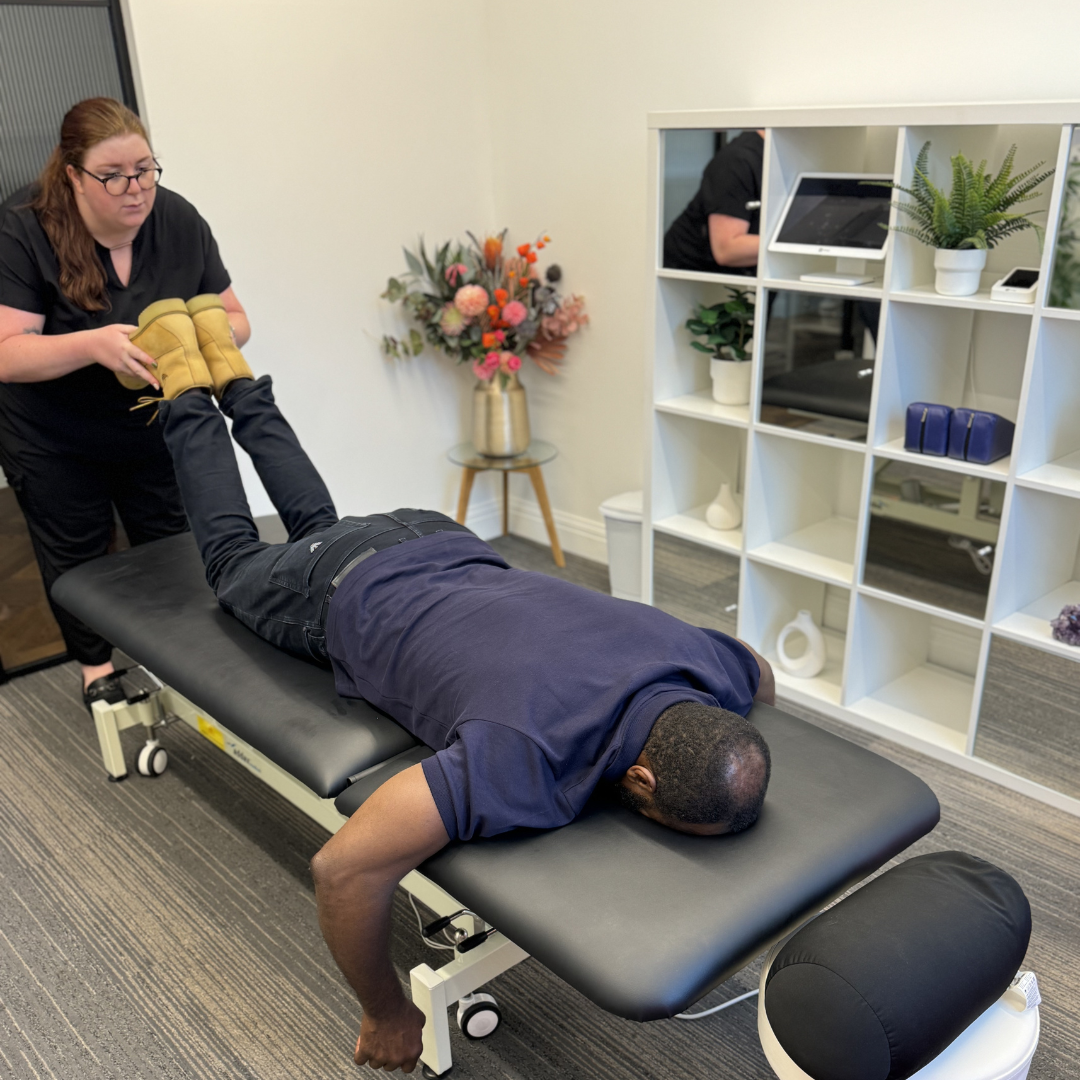
What Is Sciatica?
Symptoms, Causes & Expert Chiropractic Treatment in Bromley & Chislehurst Clinic, London
Sciatica Table of Contents
- What Is Sciatica
- Understanding the Sciatic Nerve
- Common Symptoms
- What Causes Sciatica?
- Who’s at Risk?
- How Chiropractors
- Diagnose Sciatica
- How Chiropractic
- Treatment Helps
- Scientific Explanation
- How Adjustments Work
- Home Care & Prevention Tips
- Case Study: From Desk Pain to Pain-Free Movement
- Why Choose Bromley & Chislehurst Chiropractic
- Ready to Find Relief?
- Frequently Asked Questions
What Is Sciatica?
Sciatica is nerve pain that travels from your lower back through the buttock and down one or both legs. It occurs when the sciatic nerve — the longest nerve in your body — becomes irritated, inflamed, or compressed, often due to a herniated disc, joint misalignment, or muscle tension.
At Bromley & Chislehurst Chiropractic Clinic, inside the iconic Bromley Old Town Hall, our expert chiropractors help Londoners relieve sciatica naturally through safe, precise spinal adjustments, medical acupuncture, and tailored rehabilitation.
📖 Reference: NHS Sciatica Overview / NICE Clinical Guidance NG59
Understanding the Sciatic Nerve
The sciatic nerve originates from five spinal nerve roots (L4–S3) in the lower back and travels through the pelvis, buttock, and leg — controlling movement and sensation in the thigh, calf, and foot.
When this nerve becomes irritated, it can send pain signals far from the actual source, leading to symptoms that radiate down the leg.
Common Sciatica Symptoms
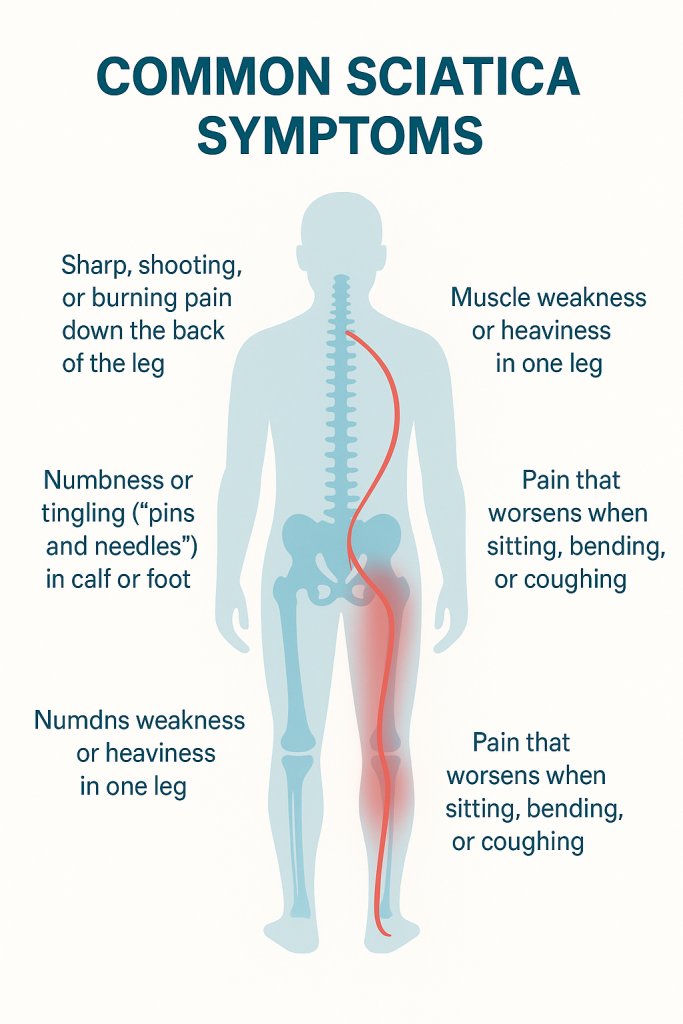
Sciatica pain can range from mild discomfort to intense, debilitating nerve pain. It is most commonly experienced on one side of the body but can sometimes alternate or radiate along both legs, depending on the level and severity of nerve involvement.
Typical symptoms include sharp, shooting, or burning pain that travels down the back of the leg, often accompanied by numbness or tingling sensations—commonly described as “pins and needles”—in the calf or foot. Some people also experience muscle weakness, heaviness, or a feeling that one leg is less stable or coordinated than the other.
The pain may worsen when sitting for long periods, bending forward, lifting heavy objects, or coughing. In more advanced cases, sciatica can disrupt sleep, make standing upright difficult, and affect overall mobility. Identifying and addressing these symptoms early can help prevent long-term nerve irritation and improve recovery outcomes.
What Causes Sciatica?
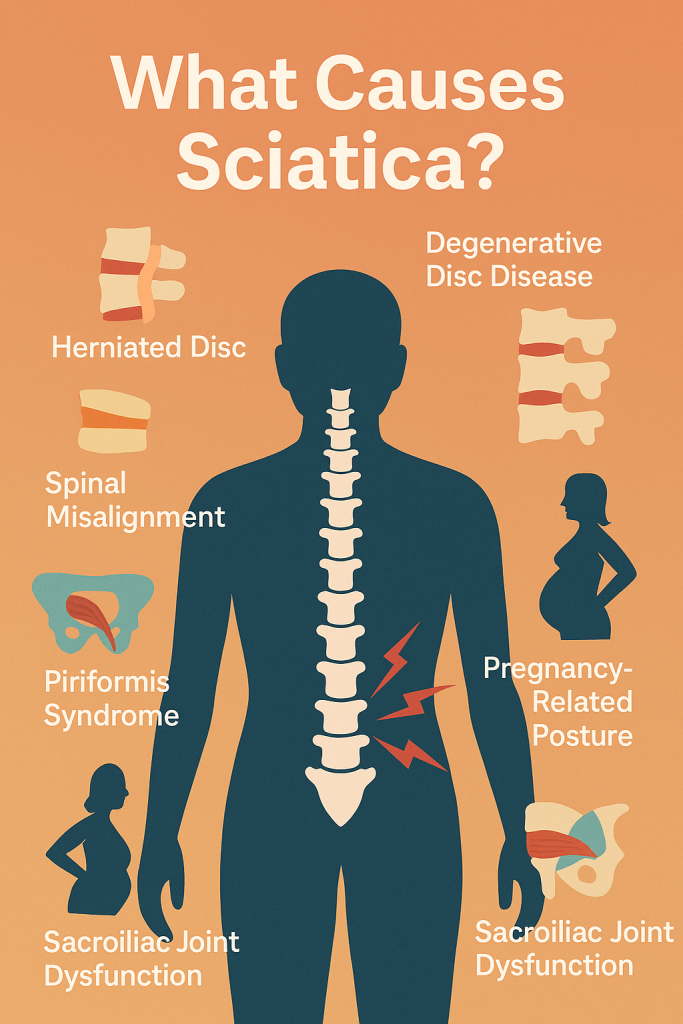
Sciatica is not a condition in itself but a symptom of an underlying issue affecting the spine, joints, or surrounding muscles. It occurs when the sciatic nerve, which runs from the lower back down each leg, becomes compressed or irritated. Understanding the cause of this nerve pressure is essential to achieving lasting relief rather than just masking the pain.
One of the most common causes is a herniated or slipped disc, where the soft inner material of a spinal disc pushes out and presses on a nearby nerve root. Degenerative disc disease, often associated with ageing, can also narrow nerve pathways and lead to irritation. Spinal misalignments (subluxations) restrict normal joint movement, creating inflammation that affects the nerves.
Other causes include piriformis syndrome, where a tight gluteal muscle compresses the nerve; sacroiliac joint dysfunction, which creates pelvic imbalance; and pregnancy-related posture changes, which can place extra stress on the pelvis and lower back. Finally, poor posture and prolonged sitting, particularly common among office professionals in London, increase pressure on the lumbar spine and contribute to nerve irritation.
Identifying the specific cause through proper assessment allows for a targeted, effective treatment plan that promotes healing and restores mobility.
Who’s at Risk?
Anyone can develop sciatica, but risk increases with:
Sedentary jobs and long commutes
Age-related spinal wear
Obesity or weak core muscles
Heavy lifting or poor movement technique
Pregnancy or postural imbalance
Stress-related muscle tension
Our chiropractors frequently help London professionals who sit for 8–10 hours daily and develop nerve compression from poor ergonomic setup.
How Chiropractors Diagnose Sciatica
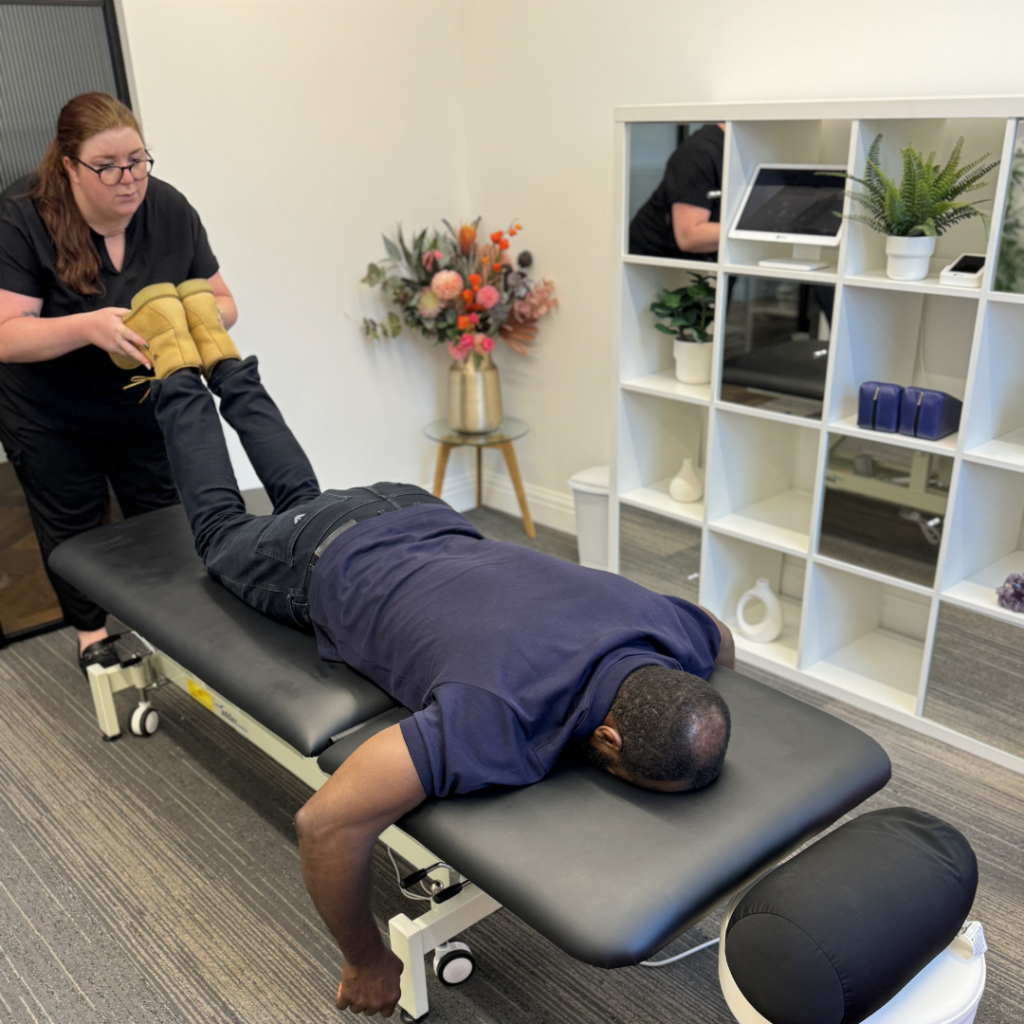
At Bromley & Chislehurst Chiropractic Clinic, every patient experiencing leg, hip, or lower back pain begins with a comprehensive diagnostic consultation designed to uncover the precise cause of their symptoms. Because sciatica can result from several different spinal, muscular, or postural problems, identifying the exact source of nerve compression is crucial to achieving long-term relief.
Your first visit involves a detailed medical history and lifestyle assessment. We discuss your symptoms, previous injuries, daily activities, work posture, exercise habits, and any factors that may aggravate or ease your pain. Understanding these patterns helps us identify whether your sciatica is structural, muscular, or posture-related.
This is followed by orthopaedic and neurological testing, including reflex checks, muscle strength evaluation, sensory testing for tingling or numbness, and specific leg manoeuvres such as the straight-leg raise and slump test. These clinical tests help pinpoint which spinal nerve roots (typically L4–S1) are affected.
A postural and gait analysis then evaluates how your spine, pelvis, and lower limbs move and align during standing and walking. We also assess joint motion, flexibility, and muscle tone to detect restrictions or compensations contributing to your condition.
If necessary, your chiropractor may recommend X-rays or MRI imaging to confirm disc involvement or rule out other pathologies. This detailed, evidence-based process ensures we treat the true cause of your sciatica, not just the site of pain, leading to safer and more effective recovery outcomes.
How Chiropractic Treatment Helps
At Bromley & Chislehurst Chiropractic Clinic, our approach to treating sciatica is rooted in precision, safety, and long-term correction. Chiropractic care does not simply mask pain — it addresses the underlying dysfunction within the spine, joints, and soft tissues that causes sciatic nerve irritation. By restoring normal spinal motion and reducing mechanical stress on the nervous system, chiropractic treatment helps the body heal naturally.
Your care begins with a thorough understanding of what’s driving the nerve compression. Once identified, your chiropractor develops a personalised treatment plan that may combine spinal adjustments, soft tissue techniques, dry needling, postural correction, and tailored rehabilitation exercises.
1. Spinal Adjustments (Chiropractic Manipulation)
Precise, gentle adjustments are used to realign restricted or misaligned vertebrae in the lumbar spine or pelvis. This restores normal motion, reduces inflammation, and relieves direct pressure on the affected nerve root. Many patients experience a noticeable reduction in pain and stiffness after just a few visits.
2. Soft Tissue Therapy
Muscles surrounding the sciatic nerve — especially the gluteal, piriformis, and hamstring groups — often become tight and inflamed. Deep tissue and myofascial release techniques help reduce tension, break down adhesions, and improve blood flow to promote healing.
3. Dry Needling (Medical Acupuncture)
Our chiropractors are uniquely qualified in medical acupuncture, also known as dry needling. By inserting ultra-fine needles into specific trigger points, we can deactivate muscle spasms, calm overactive nerves, and reduce inflammation around the sciatic pathway. This technique complements spinal adjustments and accelerates recovery.
4. Pelvic and Postural Rebalancing
Pelvic misalignment is a common but overlooked contributor to sciatica. By correcting leg length discrepancies, uneven pelvic tilt, or poor lumbar posture, we help restore spinal symmetry. Patients also receive ergonomic advice and posture retraining for desk work, commuting, or exercise to prevent recurring strain.
5. Rehabilitative Exercise and Mobility Training
Once acute pain is managed, your chiropractor introduces gentle exercises to strengthen your core, stabilise your lower back, and enhance flexibility. These may include lumbar extension drills, piriformis stretches, and nerve-gliding techniques to promote healthy nerve mobility. Consistency with these exercises helps prevent recurrence and supports long-term spinal health.
6. Neurological Reintegration
Every adjustment influences not just the spine but also how your nervous system communicates with your body. As alignment and motion improve, nerve signals become clearer, muscle coordination improves, and the body regains its natural ability to stabilise and protect itself from future flare-ups.
7. Patient Education and Aftercare
Our philosophy is that treatment doesn’t end when you leave the table. We guide you through lifestyle changes — from correct sleeping positions and lifting mechanics to stress management and stretching routines — ensuring you continue healing between visits.
By combining these techniques, Bromley & Chislehurst Chiropractic Clinic delivers an integrated, evidence-based approach to sciatica recovery. Each plan is tailored to the individual’s diagnosis, pain tolerance, and lifestyle. For many patients, chiropractic care offers a genuine alternative to medication or surgery — reducing pain, improving mobility, and restoring confidence in movement.
Ultimately, our goal is not just to relieve your symptoms but to correct the cause, restore proper function, and help you move freely again — without fear of pain returning.
Scientific Explanation: How Adjustments Work
When a spinal joint loses proper motion (known as a subluxation), it creates local inflammation and muscular guarding that irritate nearby nerve roots.
Chiropractic adjustments restore normal biomechanics, improving blood flow and reducing inflammatory mediators around the nerve.
Studies show that spinal manipulation can help reduce pain intensity, improve function, and enhance mobility in patients with sciatica by improving mechanical and neurological balance.
Find Out If Chiropractic Can Help You
Are you suffering from sciatica or leg pain?
Our chiropractors inside Battersea Power Station can help you recover safely and naturally.
📞 Phone: 0204 577 1017
💬 WhatsApp: 02045771017
Email: info@bromleyandchislehurstchiropractic.co.uk
🌐 https://bromleyandchislehurstchiropractic.co.uk
(Evening and weekend appointments available.)
Home Care & Prevention Tips
Alternate sitting and standing every 30 minutes
Gentle walking and stretching (avoid pain-provoking movements)
Apply ice (10 mins) for acute pain or heat for stiffness
Use ergonomic chairs and lumbar supports
Sleep on your side with a pillow between your knees
Maintain hydration and balanced nutrition
Case Study: From Desk Pain to Pain-Free Movement
Patient: Emma, 38, marketing executive from Bromley
Initial symptoms: Sharp right-leg pain (8/10), numb toes, pain when sitting >10 minutes.
Diagnosis: L5–S1 disc bulge compressing sciatic nerve root.
Treatment plan:
2 chiropractic adjustments weekly over 6 weeks
3 dry needling sessions
Posture correction + home exercises
Outcome:
Pain reduced from 7/10 → 2/10
Returned to running and gym workouts
Improved posture and workstation ergonomics
Why Choose Bromley & Chislehurst Chiropractic
Doctor-led clinic inside Bromley Old Town Hall
Specialists in spinal alignment and medical acupuncture
Calm, modern environment with exceptional aftercare
Personalised plans for professionals, athletes, and mothers
Minutes from North Bromley Station
We take time to understand your lifestyle, movement habits, and recovery goals — ensuring long-term results, not just short-term fixes.
Book Your Chiropractic Appointment Today
Experience expert spinal care at Bromley & Chislehurst Chiropractic Clinic, where new patients can enjoy a special 50% discount on their initial consultation. Our highly qualified chiropractors provide thorough assessments, personalised treatment plans, and gentle adjustments to relieve pain, improve posture, and restore mobility. Whether you’re dealing with back pain, sciatica, or stiffness, our team is here to help you move freely again.
Book Your Chiropractic Appointment Today and start your journey to lasting relief and better health.
📍 Bromley & Chislehurst Chiropractic Clinic
Inside Bromley Old Town Hall, London
📞 Phone: 0204 577 1017
💬 WhatsApp: 07349 791628
📧 Email: info@bromleyandchislehurstchiropractic.co.uk